
Places to visit in Delhi
Delhi, fondly known as the "City of Cities," is the vibrant capital of India where history and modernity blend seamlessly. This dynamic metropolis brings together ancient monuments, colonial architecture, bustling markets, world-class infrastructure, and contemporary attractions, creating a unique cultural experience for every traveler. As the gateway to India, Delhi enjoys excellent international and domestic connectivity, making it the ideal starting point for exploring the country. While the city itself offers countless attractions and experiences, it also serves as the gateway to Rajasthan, North India, Central India, and many other regions. It is therefore no surprise that Delhi forms the starting point of India's most popular tourist circuit in India, the Golden Triangle Tour, which also includes Agra and Jaipur.
Delhi's rich history is as fascinating as the city itself. Over the centuries, it served as the capital for several powerful dynasties, each leaving behind remarkable architectural and cultural legacies. Modern Delhi is believed to have evolved from a succession of historic cities. Among them are Lal Kot, built in the 11th century; Siri, established by Alauddin Khilji; Tughlaqabad and Ferozabad, built by the Tughlaq rulers; the Lodi city; Shahjahanabad, the magnificent Mughal capital founded by Emperor Shah Jahan; and finally New Delhi, designed by Sir Edwin Lutyens during British rule. Today, visitors can explore magnificent forts, ancient monuments, UNESCO World Heritage Sites, medieval tombs, and colonial-era buildings that beautifully narrate the city's extraordinary past.
Alongside its historical treasures, Delhi is a thriving modern metropolis offering luxury hotels, fine-dining restaurants, shopping malls, business districts, museums, art galleries, and vibrant cultural venues. Some of the city's most iconic attractions include the Red Fort, Humayun's Tomb, Qutub Minar, Jama Masjid, India Gate, Raj Ghat, Jantar Mantar, Lotus Temple (Bahá'í House of Worship), Akshardham Temple, and many more. Every corner of Delhi tells a story, making it one of India's most rewarding destinations for history lovers and first-time visitors alike.
Delhi is equally famous for its shopping and culinary experiences. From the bustling street markets of Chandni Chowk, Connaught Place, Janpath, and Sarojini Nagar to modern shopping malls and designer boutiques, the city offers something for every shopper. Food lovers can indulge in everything from legendary street food in the narrow lanes of Old Delhi to award-winning restaurants serving Indian and international cuisine. Whether you're interested in history, culture, shopping, or gastronomy, Delhi promises an unforgettable travel experience.
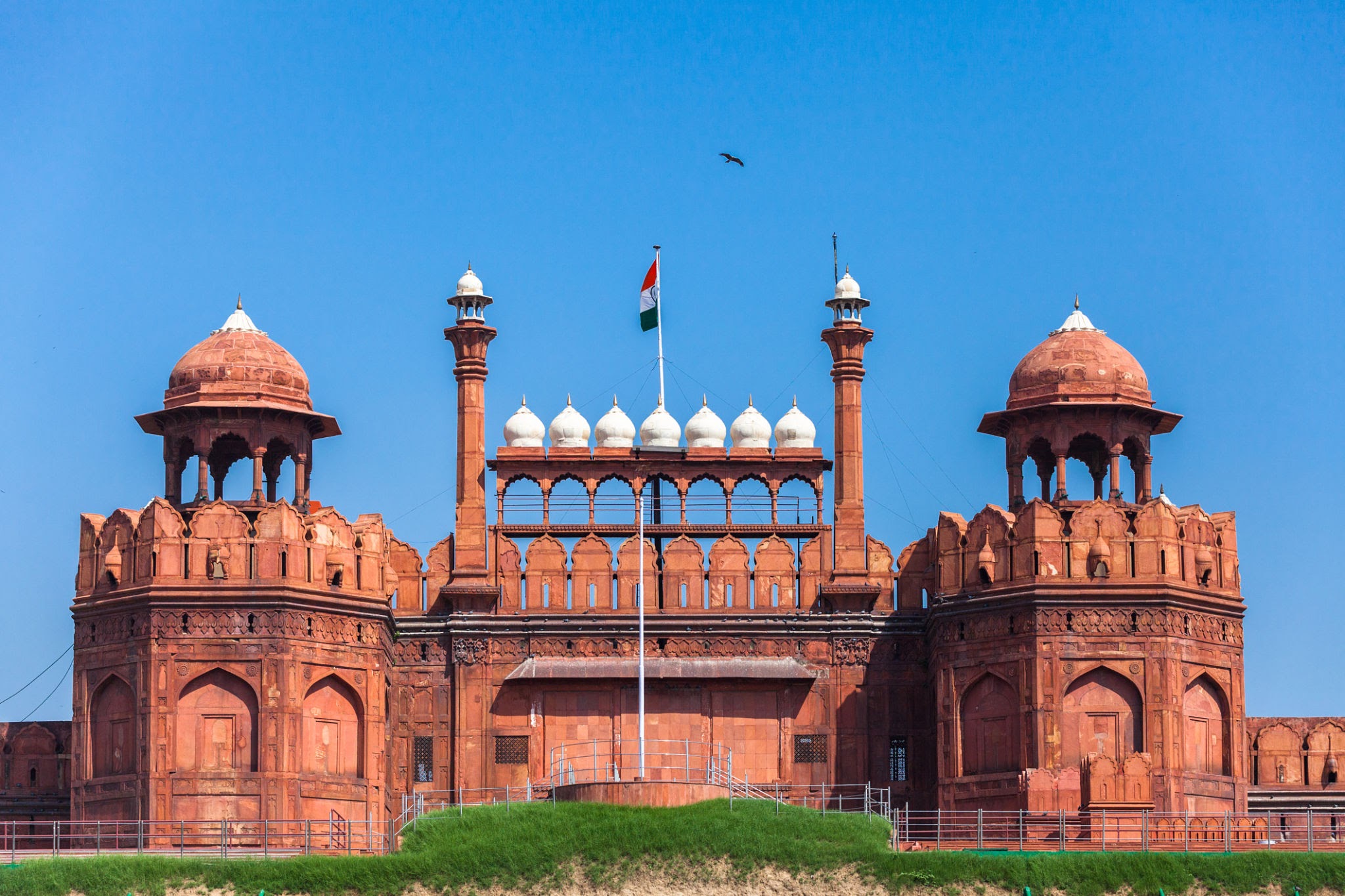
Red Fort
The Red Fort is a historic fort in the city of Delhi in India that served as the main residence of the Mughal Emperors. Emperor Shah Jahan commissioned construction of the Red Fort on 12 May 1638, when he decided to shift his capital from Agra to Delhi. Originally red and white, its design is credited to architect Ustad Ahmad Lahori, who also constructed the Taj Mahal. It was constructed between May 1639 and April 1648. On 15 August 1947, the first prime minister of India, Jawaharlal Nehru, raised the Indian national flag above the Lahori Gate. Every year on India's Independence Day, the prime minister hoists the Indian "tricolour flag" at the fort's main gate and delivers a nationally broadcast speech from its ramparts.
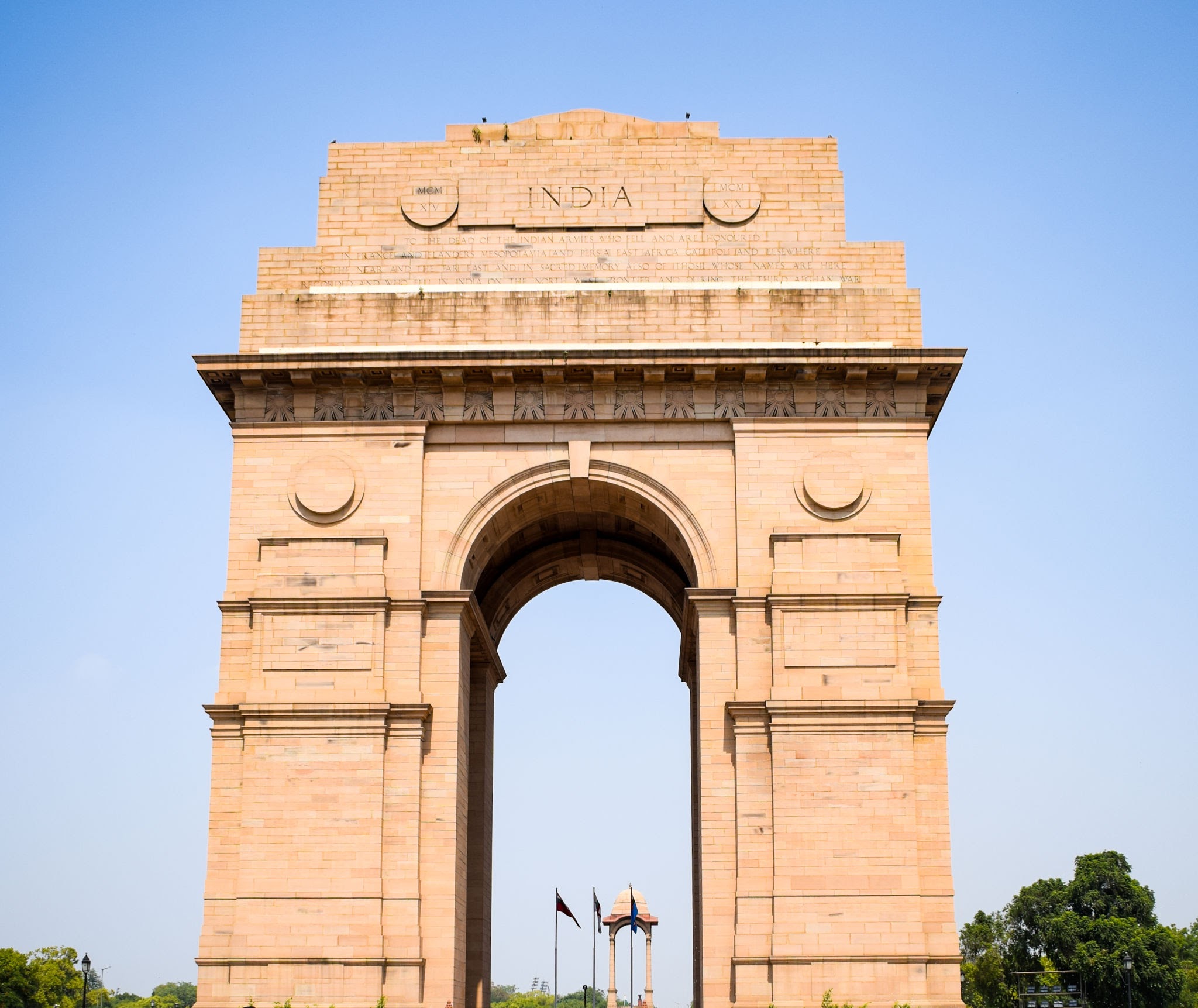
India Gate
The India Gate is a war memorial located astride the Rajpath, on the eastern edge of the "ceremonial axis" of New Delhi, formerly called Kingsway. It stands as a memorial to 70,000 soldiers of the British Indian Army who died in between 1914–1921 in the First World War, in France, Flanders, Mesopotamia, Persia, East Africa, Gallipoli and elsewhere in the Near and the Far East, and the third Anglo-Afghan War. 13,300 servicemen's names, including some soldiers and officers from the United Kingdom, are inscribed on the gate. Designed by Sir Edwin Lutyens, the gate evokes the architectural style of the triumphal arch such as the Arch of Constantine, in Rome, and is often compared to the Arc de Triomphe in Paris, and the Gateway of India in Mumbai. Following the Bangladesh Liberation war in 1972, a structure consisting of a black marble plinth with a reversed rifle, capped by a war helmet and bounded by four eternal flames, was built beneath the archway. This structure, called Amar Jawan Jyoti, has since 1971 served as India's tomb of the unknown soldier.

Visit to Rashtrapati Bhawan
Visit to Rashtrapati Bhawan
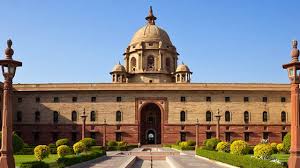
Rashtrapati Bhavan
Rashtrapati Bhavan (President’s House): Rashtrapati Bhavan is the authorized residence of the President of the country. It was designed by Lutyens and was the official residence of the Viceroy when the British ruled India
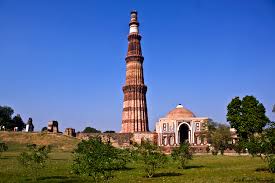
Qutub Minar
Qutub Minar This outstanding building in the Southern part of the capital was built by the Muslim King; Qutab–ud–din Aibak in 1199 A.D. The Minar (tower) is 72.5 meters tall and its base is a mosque
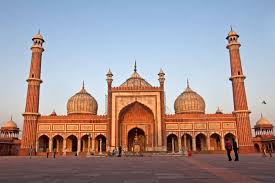
Jama Masjid
Jama Masjid is one of the country’s major mosques where hundreds and thousands of Muslims offer their prayers even today. Jama Masjid was constructed by Shah Jahan as an architectural extravaganza in 1658. The wonders of construction in Jama Masjid are seen in the long stretches of stairs and the hefty courtyard
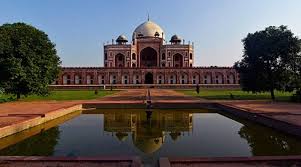
Humayun’s Tomb
Humayun’s Tomb Nine years after the death of Humayun, Haji Begum (widow of Humayun) built this tomb in 1565-66 in his memory. The garden tomb is one of the world heritage sites inscribed by UNESCO and is said to be the motivation behind the 'wonder of the world' Taj Mahal
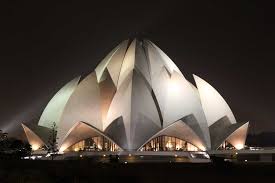
Lotus Temple
The Lotus Temple, located in Delhi, India, is a Bahá'í House of Worship that was dedicated in December 1986. Notable for its flowerlike shape, it has become a prominent attraction in the city. Like all Bahá'í Houses of Worship, the Lotus Temple is open to all, regardless of religion or any other qualification. The building is composed of 27 free-standing marble-clad "petals" arranged in clusters of three to form nine sides, with nine doors opening onto a central hall with a height of slightly over 34.27 metres and a capacity of 2,500 people. The Lotus Temple has won numerous architectural awards and has been featured in many newspaper and magazine articles
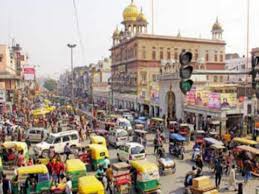
Chandni Chowk
Chandni Chowk (Silver Street): Chandni Chowk is well-known for its flamboyant streets with the famous shopping spots of Old Delhi. It also has the country’s best known extensive market for textiles, electronic goods, and watches.