
Places to visit in Jaipur
Jaipur, fondly known as the Pink City, is the capital of the northern Indian state of Rajasthan. Named after its founder, Maharaja Sawai Jai Singh II (1693–1743), this magnificent royal city is one of the most celebrated tourist destinations in India. A key stop on the famous Golden Triangle Tour, Jaipur is surrounded by the Aravalli Hills and is adorned with majestic hill forts, magnificent palaces, vibrant bazaars, and architectural marvels. Several of its monuments are recognized as UNESCO World Heritage Sites. Jaipur tours offer an unforgettable experience for history enthusiasts, culture lovers, and travelers seeking the warmth of authentic Rajasthani hospitality.
Jaipur earned its famous pink hue in 1876 when Maharaja Sawai Ram Singh II ordered the city to be painted pink to welcome the Prince of Wales, who later became King Edward VII. Widely regarded as one of India's first planned cities, Jaipur was designed by the renowned architect and scholar Vidyadhar Bhattacharya in accordance with the ancient principles of Vastu Shastra. The historic walled city, now a UNESCO World Heritage Site, features seven grand gates, broad avenues, well-planned streets, and uniform marketplaces. Its unique nine-sector layout symbolically represents the nine divisions of the universe, making Jaipur an extraordinary example of traditional Indian urban planning.
Today, Jaipur is home to some of Rajasthan's most iconic attractions. Dominating the surrounding hills are the magnificent Amer Fort, Jaigarh Fort, and Nahargarh Fort, each offering breathtaking views and fascinating stories of Rajput valor. In the heart of the city stands the splendid City Palace, which continues to serve as the residence of Jaipur's royal family while housing an impressive museum. The Jantar Mantar, a UNESCO World Heritage Site, showcases remarkable astronomical instruments built in the 18th century. Equally captivating are the picturesque Jal Mahal, gracefully situated in the middle of Man Sagar Lake, and the iconic Hawa Mahal, or Palace of Winds, renowned for its unique honeycomb façade and exquisite Rajput architecture.
Beyond its architectural wonders, Jaipur is a paradise for shoppers and food lovers. The city's colorful bazaars are famous for traditional Bandhani textiles, handcrafted jewelry, blue pottery, block-printed fabrics, gemstones, leather goods, and exquisite handicrafts. Visitors can also indulge in authentic Rajasthani cuisine, experience royal hospitality, and enjoy cultural performances that reflect the rich traditions of the state. Besides its own attractions, Jaipur serves as the perfect gateway to exploring the other magnificent royal cities and heritage destinations of Rajasthan, making it one of the most rewarding travel experiences in India.
.jpg)
The City Palace
Located in the heart of Jaipur, The City Palace is a magnificent blend of Rajput, Mughal, and European architectural styles. Still home to Jaipur's royal family, the palace complex includes grand courtyards, beautifully decorated gateways, museums, royal galleries, and historic collections. A visit offers fascinating insights into Rajasthan's regal history, artistic traditions, and centuries of royal heritage.
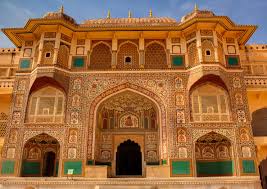
Amber Fort
The Amber Fort is located 11 km away from Jaipur. Amber was once the ancient capital of Jaipur. The Fort is an excellent illustration of Rajput architecture, impressively situated on a hillside facing a lake, which reflects its walkways and walls.
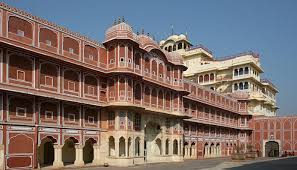
City Palace
City Palace The City Palace is still the dwelling of the former royalty H.H Bhawani Singh Ji of Jaipur. This Palace still has an extensive collection of art, carpets and old weapons.
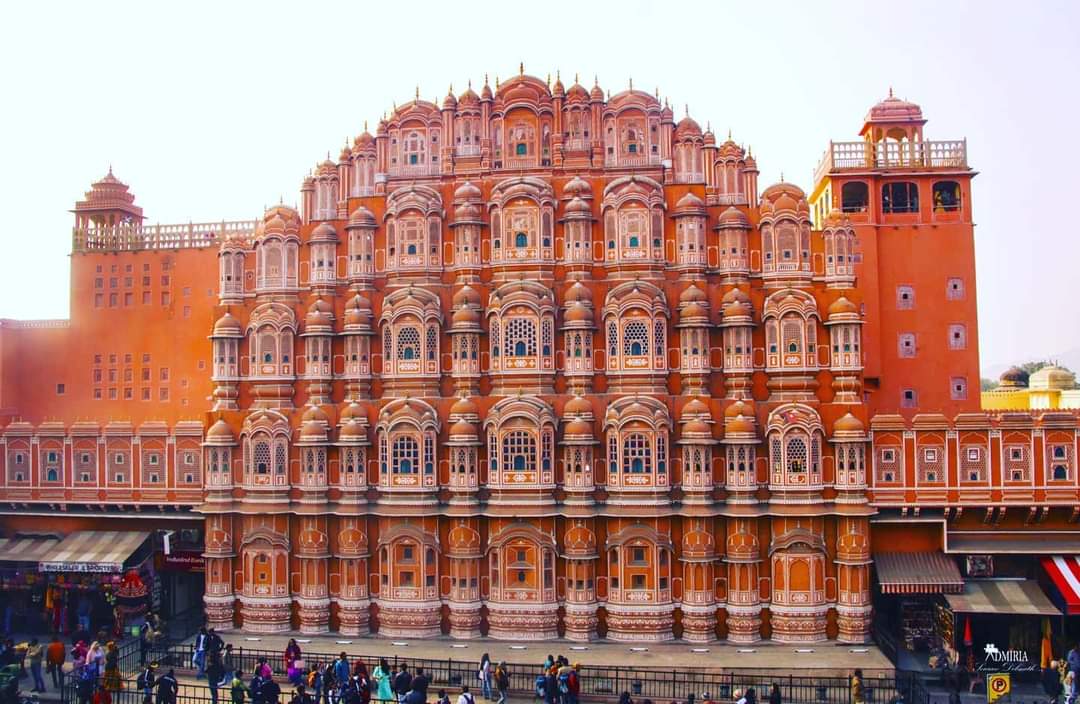
Hawa Mahal
Hawa Mahal (Palace of winds) Constructed by Maharaja Sawaj Pratap Singh in 1799, the Hawa Mahal is one of the Jaipur’s main landmarks, the front of the Mahal has pink windows and latticework screens. This mahal was initially constructed for the ladies of the imperial household to watch the ordinary life and parades of the city.
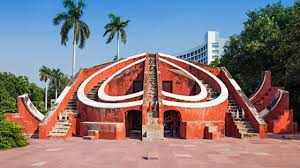
Jantar Mantar
Jantar Mantar (Observatory): It was built by Maharaja Jai Singh in 1728. Jantar Mantar appears to be an inquisitive collection of sculptures but in fact each construction has a detailed purpose such as measuring the positions of stars, altitudes and azimuths, and calculating eclipses. The most striking instrument is the sundial which is 27 meter tall gnomon. The shadow this casts moves up to 4 meters an hour.
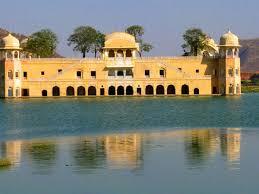
Jal Mahal
Jal Mahal is a palace in the middle of the Man Sagar Lake in Jaipur city, the capital of the state of Rajasthan, India. The palace and the lake around it were renovated and enlarged in the 18th century by Maharaja Jai Singh II of Amber.
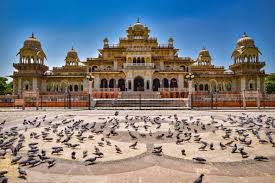
Albert Hall Museum
The Albert Hall Museum in Jaipur is the oldest museum of the state and functions as the state museum of Rajasthan, India. The building is situated in Ram Niwas garden outside the city wall opposite New gate and is a fine example of Indo-Saracenic architecture. It is also called the Government Central Museum