
Places to visit in Mysore
Located at the foothills of the Chamundi Hills, Mysore (Mysuru) is one of the most beautiful heritage cities in India. Situated about 140 km from Bengaluru in the southern Indian state of Karnataka, Mysore is renowned for its royal heritage, magnificent palaces, grand temples, and well-manicured gardens. Perched at an elevation of approximately 770 meters above sea level, the city enjoys a pleasant climate throughout the year. Once the capital of the Wodeyar dynasty, Mysore continues to captivate visitors with its rich history, architectural splendor, and vibrant cultural traditions, making it one of the most popular tourist destinations in South India.
Mysore's royal legacy is reflected in its remarkable monuments and historic landmarks. The city's most iconic attraction is the magnificent Mysore Palace (Amba Vilas Palace), one of the largest and most beautiful royal residences in India. Rebuilt in 1912, the palace showcases an exquisite blend of Indo-Saracenic architecture, combining Hindu, Islamic, Gothic, and Rajput styles. Every Sunday evening and throughout the famous Mysore Dasara festival, the palace is illuminated with thousands of lights, creating a spectacular sight. Other notable heritage attractions include Jaganmohan Palace, Lalitha Mahal Palace, and Jayalakshmi Vilas Mansion. Nearby, visitors can also explore Srirangapatna Fort and Tipu Sultan's Summer Palace, both of which offer fascinating insights into Karnataka's rich history.
Mysore offers a wide range of attractions for nature lovers, history enthusiasts, and spiritual seekers alike. Popular sightseeing spots include the Mysore Zoo, one of India's oldest and best-maintained zoological parks, the beautifully landscaped Brindavan Gardens, the scenic Krishnarajasagara (KRS) Dam, Ranganathittu Bird Sanctuary, Karanji Lake, Kukkarahalli Lake, and Lingabudi Lake. Important religious landmarks include the revered Chamundeshwari Temple atop Chamundi Hills, Sri Ranganathaswamy Temple at Srirangapatna, St. Philomena's Cathedral, the Jama Masjid at Srirangapatna, and the magnificent Golden Temple at Bylakuppe, one of the largest Tibetan Buddhist monasteries in India.
Beyond its historical attractions, Mysore is internationally recognized as one of India's leading centers for yoga and wellness. The city is also famous for its fragrant sandalwood products, intricately carved handicrafts, traditional rosewood inlay work, and the world-renowned Mysore silk sarees, which make excellent souvenirs. Food lovers can savor authentic Karnataka cuisine and classic South Indian delicacies served in traditional restaurants across the city. With its royal heritage, cultural richness, scenic beauty, and warm hospitality, Mysore offers an unforgettable travel experience and serves as an excellent base for exploring other attractions in Karnataka.
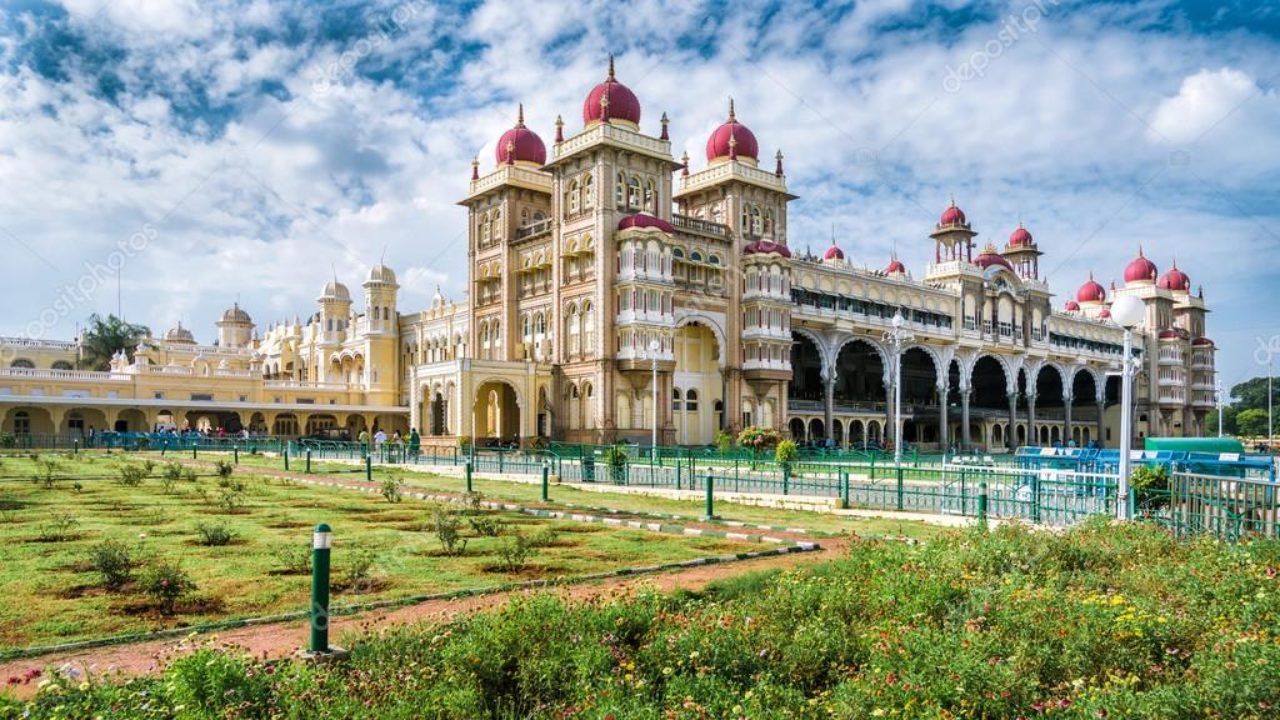
Mysore Palace
The Mysore Palace is a historical palace and the royal residence at Mysore in the Indian State of Karnataka. It is the official residence of the Wadiyar dynasty and the seat of the Kingdom of Mysore. The palace is in the centre of Mysore, and faces the Chamundi Hills eastward. Mysore is commonly described as the 'City of Palaces', and there are seven palaces including this one; however, 'Mysore Palace' refers specifically to this one within the Old fort. The land on which the palace now stands was originally known as puragiri, and is now known as the Old Fort. Yaduraya built the first palace inside the Old Fort in the 14th century, which was demolished and constructed multiple times. The current structure was constructed between 1897 and 1912, after the Old Palace was burnt ablaze Mysore Palace is now one of the most famous tourist attractions in India, after the Taj Mahal, with more than 6 million annual visitors.
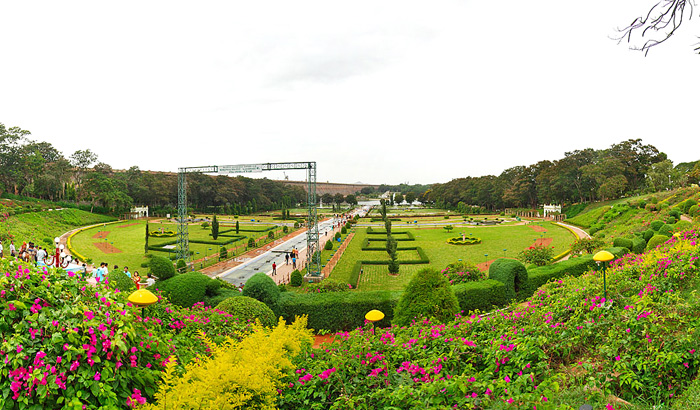
Brindavan Gardens
The Brindavan Gardens is a garden located in the Mandya District of the Indian State of Karnataka. It lies adjoining the Krishnarajasagara Dam which is built across the river Kaveri. The work on laying out this garden was started in the year 1927 and completed in 1932. Visited by close to 2 million tourists per year, the garden is one of the major attractions of Srirangapatna. Sir Mirza Ismail, the Deewan of Mysore, a man with a penchant for gardens, founded the Brindavan Gardens and built the Cauvery River high-level canal to irrigate 120,000 acres in modern Mandya district. He was inspired by Hyder Ali who had earlier built the Lalbagh Botanical Gardens at Bangalore
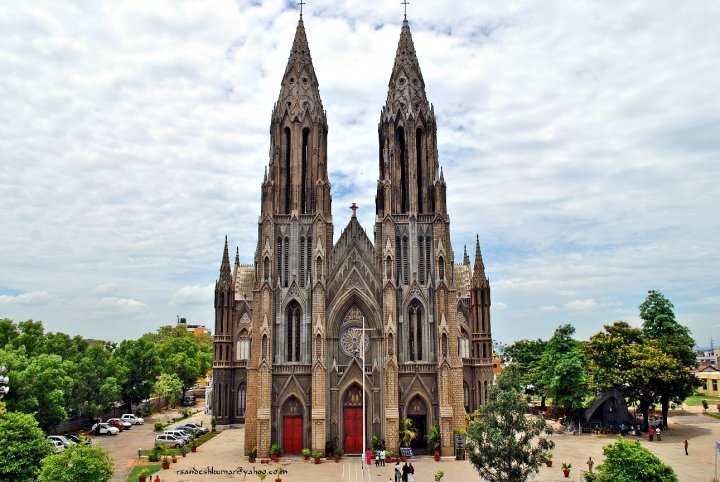
St. Philomena's Cathedral
St. Philomena’s Cathedral is a Catholic church that is the cathedral of the Diocese of Mysore, India. The full name is the Cathedral of St. Joseph and St. Philomena. It is also known as St. Joseph's Cathedral. It was constructed in 1936 using a Neo Gothic style and its architecture was inspired by the Cologne Cathedral in Germany. This is one of the tallest churches in Asia.

Ranganathittu Bird Sanctuary
Ranganathittu Bird Sanctuary, is a bird sanctuary in the Mandya District of the state of Karnataka in India. It is the largest bird sanctuary in the state, 40 acres in area, and comprises six islets on the banks of the Kaveri river. Ranganathittu is located 3 kilometers from the historic town of Srirangapattana and 16 kilometres north of Mysore. The sanctuary attracted about 3 lakh visitors during 2016–17.
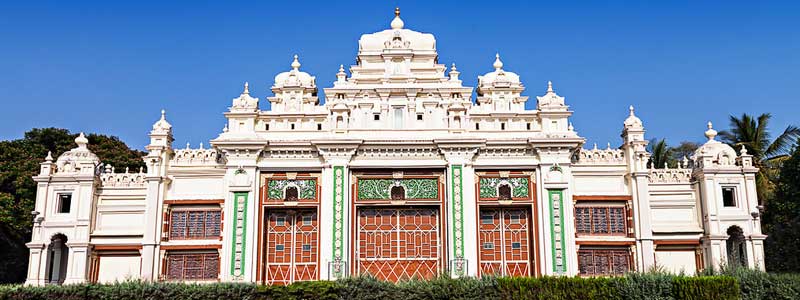
Jaganmohan Palace Art Gallery And Auditorium
Jaganmohan Palace is a palace in the city of Mysore, India. Its construction was completed in 1861 and was initially used by the Wodeyars, kings of Mysore as their home. It is now used as an art gallery and a function hall. The palace is one of the seven palaces of the royal city of Mysore
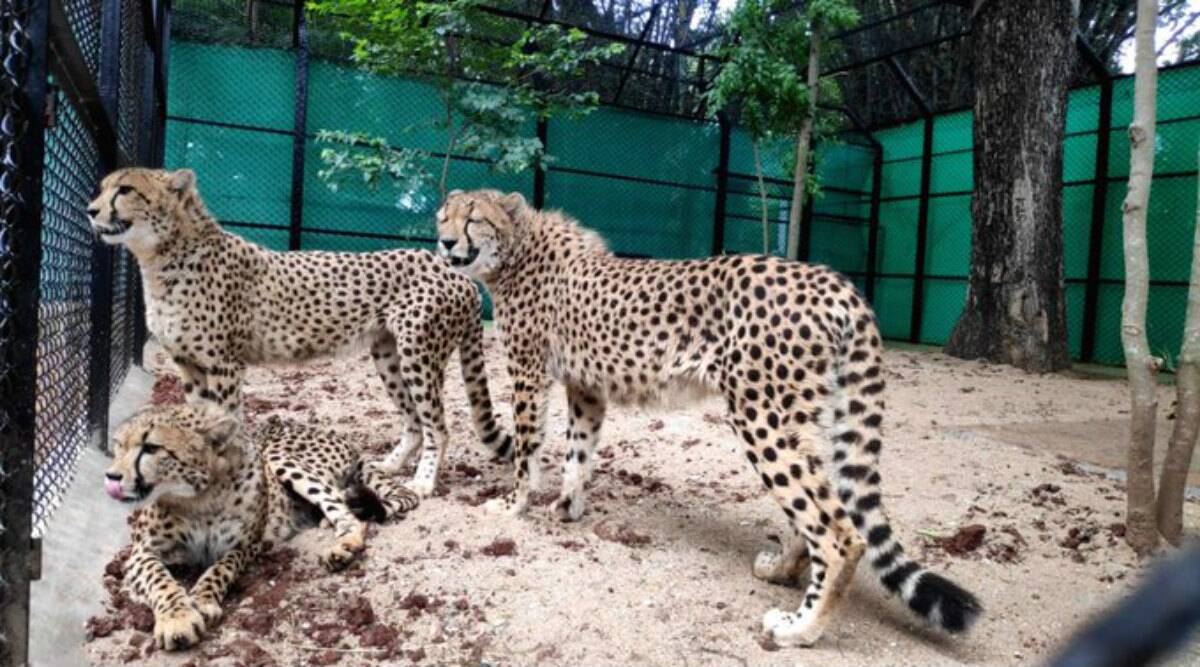
Sri Chamarajendra Zoological Gardens
Mysore Zoo is a 157-acre zoo located near the palace in Mysore, India. It is one of the oldest and most popular zoos in India, and is home to a wide range of species. Mysore Zoo is one of the city's most popular attractions. While mainly depending on entry fees for its financing, an adoption scheme introduced in the early 2000s has been a success. Celebrities, institutions, animal lovers and volunteers of various clubs in the zoo have contributed directly to the welfare of the zoo inhabitants
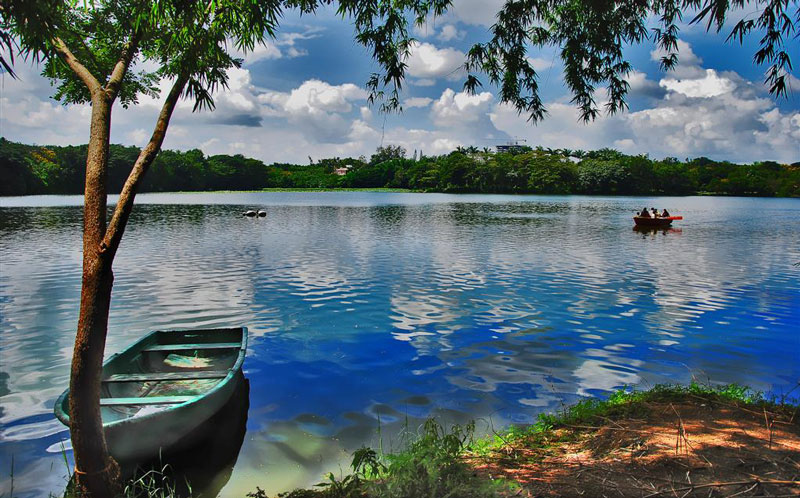
Karanji Lake
Karanji Lake is a lake located in the city of Mysore in the state of Karnataka, India. The lake is surrounded by a nature park consisting of a butterfly park and a walk-through aviary. This aviary is the biggest 'walk-through aviary' in India. There is also a museum, the Regional Museum of Natural History which is located on the banks of this lake. The total area of Karanji lake is 90 hectares. While waterspread area is about 55 hectares, the foreshore area measures about 35 hectares. Karanji lake is owned by the Mysore Zoo Authority. Mysore Zoo gets a revenue of an average of Rs. 50000 per day from ticket sales to enthusiasts who visit this lake.
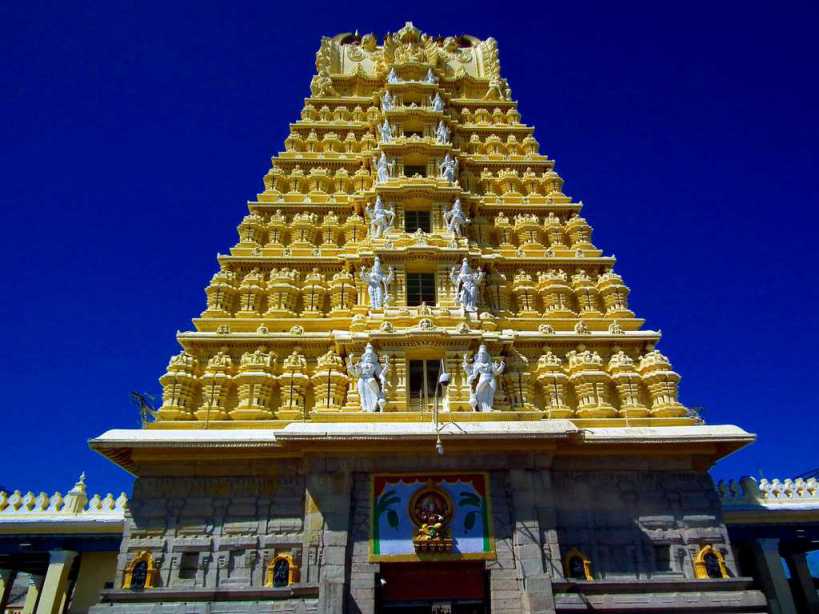
Shri Chamundeshwari Temple
The Chamundeshwari Temple is a Hindu temple located on the top of Chamundi Hills about 13 km from the palace city of Mysore in the state of Karnataka in India. The temple was named after Chamundeshwari or Durga, the fierce form of Shakti, a tutelary deity held in reverence for centuries by Mysore Maharajas. Chamundeshwari is called by the people of Karnataka as Naada Devathe which means State Goddess. It is situated at the elevation of 838 feet from the mean sea level.
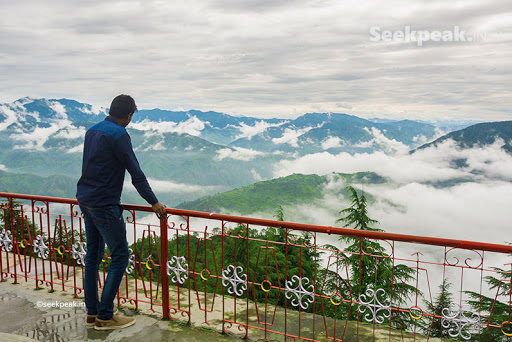
Lal Tibba Scenic Point
Lal Tibba is a popular viewpoint, located on the top of Depot Hill in Landour, approximately 6 kilometres from Mussoorie. Being the highest point in the area, Lal Tibba is one of the most stunning viewpoints in the region. Rising to a height of 2,275 meters (7,164 feet), Lal Tibba affords breathtaking views of Nilkantha peak (6,596 meters) in Badrinath, Kedarnath peak (6,940 meters), up to Banderpoonch range of three peaks with the highest rising to 6,316 meters. It is also a popular sunrise and sunset point.
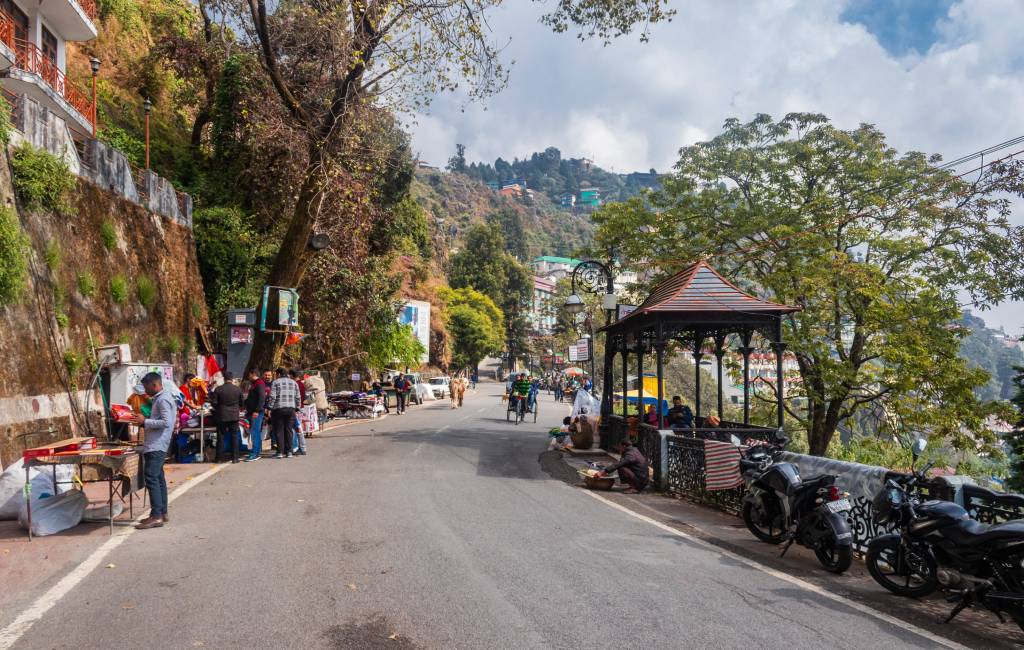
Mall Road, Mussoorie
Located in the heart of Mussoorie, the Mall is a colonial relic with benches and lampposts filled with modern shops, video game parlours and skating rinks.
You can often find the author Ruskin Bond browsing the Cambridge Bookstore. There would be a lot of local vendors around including photographers who can click awesome photographs for you. Do try out a photograph in local traditional attire here.
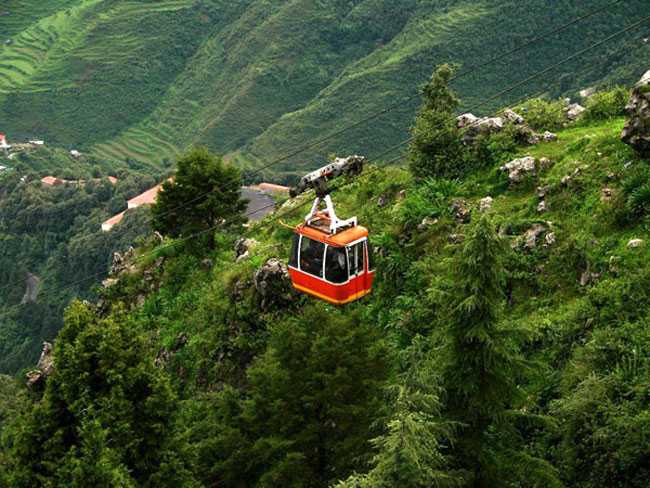
Gun Hill, Mussoorie
Said to be an extinct volcano, the Gun Hill is the second-highest point in Mussoorie, situated at an altitude of 2024 meters. The scene from the top of this hill is a panoramic view of the snow-clad Himalayan ranges right beside the widespread Doon Valley and a full view of the hill station of Mussoorie. The Gun Hill, located 400 ft above the Mall Road, is a popular attraction, especially amongst the photographers and nature lovers.
The highlight of Gun Hill is the ropeway which provides a scenic view of the Himalayan ranges. The hill was named so because of the presence of a gun at these hills during the pre-independence days. The gun was fired during the day to enable people to adjust their watches during those days.
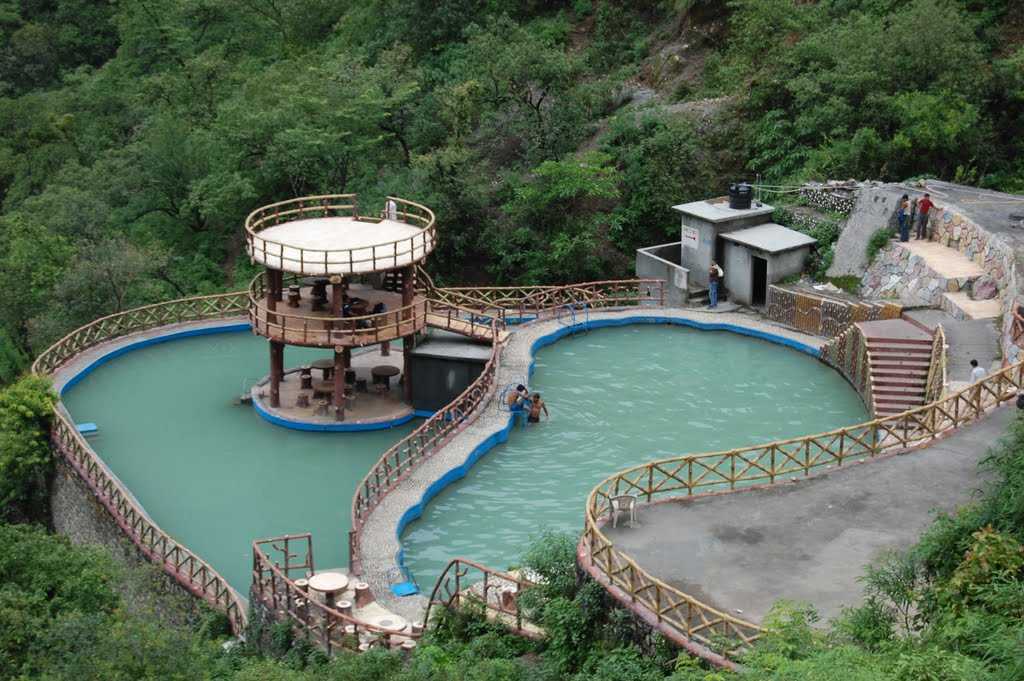
Lake Mist, Mussoorie
The pristine Lake Mist is among the most beautiful destinations in the Queen of Hills i.e. Mussoorie. The emerald waters are covered by green forest terrains from sides giving the whole scenario a resplendent image making it an ideal for spending the moments of repose with your family and friends.
Lake Mist falls on the way to Kempty Falls. The major highlight of this scenic lake is the less crowded, hence, you can enjoy the calmness in the laps of nature. It is a gem of attraction.
Rail Museum
The Railway Museum at Mysore, India is an outdoor exhibit of vintage locomotives. The Railway Museum was established in 1979 by Indian Railways, the second such museum after the National Railway Museum in Delhi. The museum is opposite the Central Food Technology and Research Institute on Krishnaraja Sagar Road. It has locomotives and a gallery of photographs and paintings depicting the growth of railways in India. Railway signals and lights are also displayed. The museum has a battery-operated mini-train giving a short ride for children on the grounds.
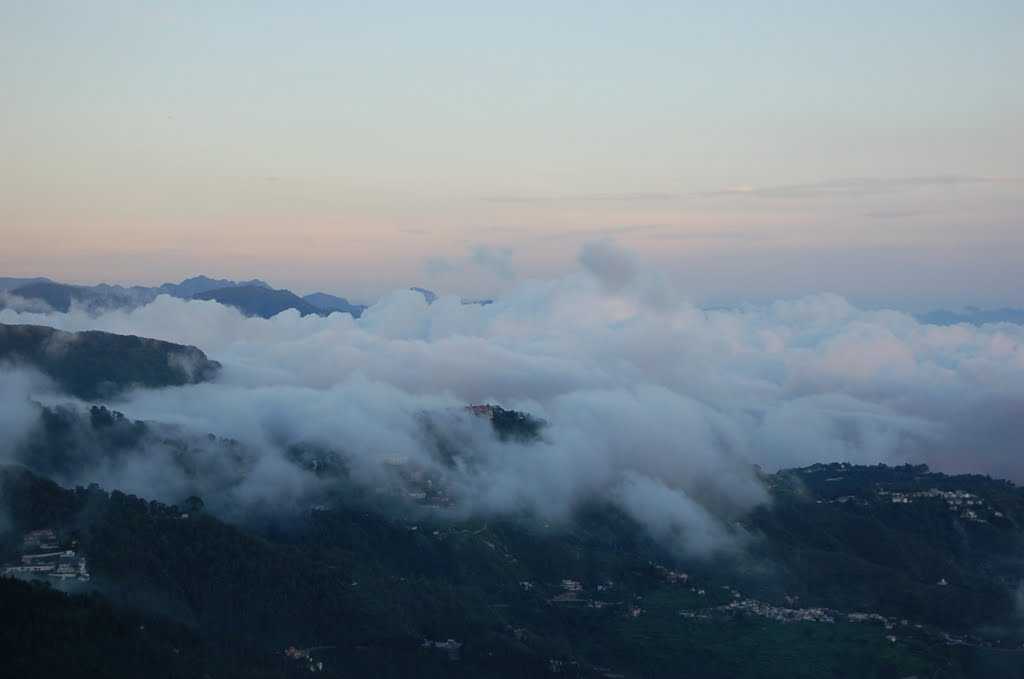
Cloud's End, Mussoorie
6 km west off the Library, the Cloud's End viewpoint marks the geographical end of the beautiful hilltown of Mussoorie. Surrounded by thick oak and deodar forests, it tracks 2 km up to the Benog Wildlife Sanctuary offering a lovely walking track, taking in the soothing mountain air. Cloud's End is visited for the breathtaking views it offers, especially of the Aglar River Valley.
Another major attraction at Cloud's End is a heritage building set up by a Britisher in 1838, which is one of the oldest buildings in Mussoorie. Retaining the original architecture and other relics, it has now been converted into a heritage hotel (Clouds End Forest Resort). Tourists spend some tranquil time during their stay, along with partaking in activities like hiking, hill climbing and nature walks arranged by the hotel on request. People often club the visit to Cloud's End with the famous attractions nearby - Jwala Devi Temple and Benong Wildlife Sanctuary.